












Nigeria’s Refined Fuel Exports Rise Sevenfold as Dangote Refinery Expands
- August 26, 2026
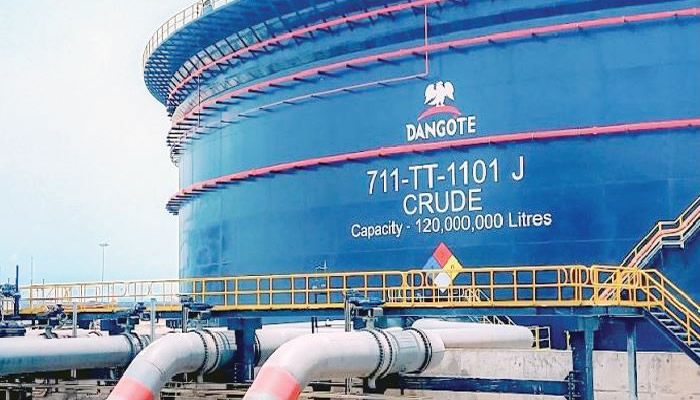
Nigeria’s seaborne petroleum product exports have increased seven-fold since 2023, driven largely by rising output from the Dangote Petroleum Refinery, the US Energy Information Administration (EIA) has said.
According to the EIA, Nigeria’s seaborne petroleum product shipments averaged 561,000 barrels per day (b/d) in the second quarter of 2026, compared with an annual average of 79,000 b/d in 2023.
The agency said about 350,000 b/d of the shipments were exported during the quarter, compared with an annual average of 46,000 b/d in 2023.
“Seaborne petroleum product exports from Nigeria have grown seven-fold since 2023, playing an increasing role in the international market for petroleum products at a time when supplies from other areas have been constrained,” the EIA said.
The agency attributed the increase to the commissioning of the Dangote refinery in January 2024 and its subsequent expansion.
“Underpinned by the opening of the Dangote refinery in January 2024, seaborne petroleum product shipments from Nigeria averaged 561,000 barrels per day (b/d) in the second quarter of 2026 (2Q26), compared with an annual average of 79,000 b/d in 2023, according to data from Vortexa,” it said.
“Of those shipments, 350,000 b/d were exported in 2Q26, compared with an annual average of 46,000 b/d in 2023.”
The EIA said increased domestic availability of refined petroleum products had also contributed to a sharp reduction in Nigeria’s imports.
“With the increased supply of petroleum products in Nigeria from the country’s largest refinery, imports fell, exports increased, and Nigeria became more self-sufficient in refined petroleum products,” the agency said.
Nigeria’s seaborne petroleum product imports, which stood at nearly 400,000 b/d in 2023, fell to less than 130,000 b/d in the second quarter of 2026, according to the EIA.
The agency also reported a significant increase in petroleum product shipments within Nigeria.
Intra-Nigeria shipments averaged 211,000 b/d in the second quarter of 2026, up from 81,000 b/d in 2025 and 33,000 b/d in 2023.
“Before the Dangote refinery came on stream, Nigeria’s state-owned refineries were shipping less than 100,000 b/d of petroleum products by sea to domestic locations and foreign markets,” the EIA said.
Nigeria’s refined petroleum products are also gaining a stronger presence in international markets.
READ ALSO: Nigeria’s Petrol Puzzle: Why Rising Imports Are Returning Despite Expanding Refining Capacity
The EIA said exports to Europe averaged 130,000 b/d in the second quarter of 2026, compared with 40,000 b/d in 2025 and 15,000 b/d in 2023.
Exports to other African countries reached almost 120,000 b/d during the quarter, compared with 89,000 b/d in 2025.
The agency said Nigeria also exported about 110,000 b/d of refined petroleum products to Asia and Oceania during the period.
The Dangote refinery increased its crude distillation capacity from 650,000 b/d to 700,000 b/d following maintenance and expansion works completed in February 2026.
The EIA said the refinery’s increased output had strengthened Nigeria’s position in the international petroleum products market.
Dangote is also planning to add another 750,000-b/d crude distillation unit to the refinery, with completion targeted for 2028.