








Oando in deep financial, regulatory trouble over ₦3.8tn capital deficit
- July 12, 2026
Nigeria’s Oando Plc is facing financial and regulatory challenges after its own auditors flagged a N3.8 trillion working capital deficit and multiple breaches of the Companies and Allied Matters Act (CAMA).
This is contained in the company’s recently published audited financial statements for the year ended December 31, 2025.
According to the financial statement, Oando’s current liabilities stood at N6.6 trillion, more than double its current assets of N2.8 trillion, leaving a working capital deficiency of N3.8 trillion.
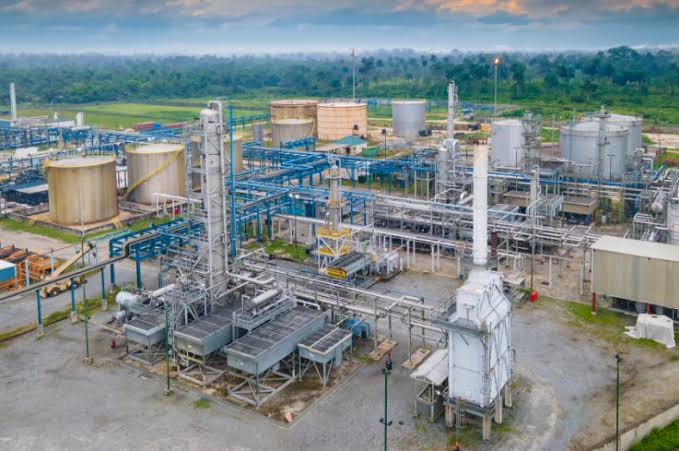
The deficit emerged less than a year after the company completed the acquisition of Nigerian Agip Oil Company (NAOC). This transaction significantly expanded its upstream portfolio but also increased pressure on its balance sheet.
The asset’s gross output is around 30,000 Barrels of Oil per Day (BOPD) and 500 million standard cubic feet per Day of gas.
In its audit report, BDO Professional Services said the financial position represented a material uncertainty that could cast significant doubt on the Group’s ability to continue as a going concern.
“The Group and the Company incurred a working capital deficiency of N3.806 trillion and N2.903 trillion respectively,” the auditors stated.
Beyond the liquidity concerns, the auditors identified what they described as non-compliance with provisions of the Companies and Allied Matters Act.
One of the issues concerns the forgiveness of N447.9 billion owed by Oando Plc to its two subsidiaries, Oando Oil Limited and Oando Servco Limited.
According to BDO, both subsidiaries had accumulated losses and lacked sufficient realised profits to support such a transaction. The auditors said the debt waiver amounted to a distribution out of capital rather than profits, contrary to Sections 426 and 427 of CAMA 2020.
“The debt forgiveness by the subsidiaries to the parent company was therefore an impermissible distribution out of capital,” the auditors noted.
The audit report also raised concerns over the acquisition of 4.28 billion shares linked to the settlement of obligations involving Whitmore Asset Management and the subsequent distribution of one share for every 12 shares held by existing shareholders.
According to the auditors, the transactions may have contravened provisions of CAMA relating to a company’s acquisition and maintenance of its own shares.
The regulatory concerns come at a time when Oando is seeking fresh funding to shore up its finances.
To address the funding gap, the company said it plans to raise N500 billion through a rights issue or private placement, with an initial tranche of N220 billion expected in the second quarter of 2026.
Oando also disclosed plans to establish a $1.5 billion debt issuance programme and convert up to $300 million of reserve-based lending debt into equity.
As part of efforts to conserve cash, the board did not recommend a dividend for the year.
The company is also dealing with the financial implications of the expiration of the Power Purchase Agreement for the Okpai Independent Power Plant.
Following the non-renewal of the agreement by the Nigerian Bulk Electricity Trading Plc in December 2025, Oando derecognised N473.3 billion in finance lease receivables and recognised its 40 per cent interest in the power plant as property, plant and equipment valued at N218.9 billion.
The company reported a profit after tax of N204.8 billion for the year, compared with N220.1 billion in 2024, while revenue fell by 22 per cent to N3.18 trillion from N4.09 trillion.
Oando said its plans to raise fresh capital, restructure debt and secure continued support from shareholders would enable it to meet its obligations as they fall due.
However, BDO noted that while the company relied on a letter of financial support from its majority shareholder, Ocean and Oil Development Partners, it was unable to independently verify evidence of the shareholder’s financial capacity to provide the support outlined in the undertaking.