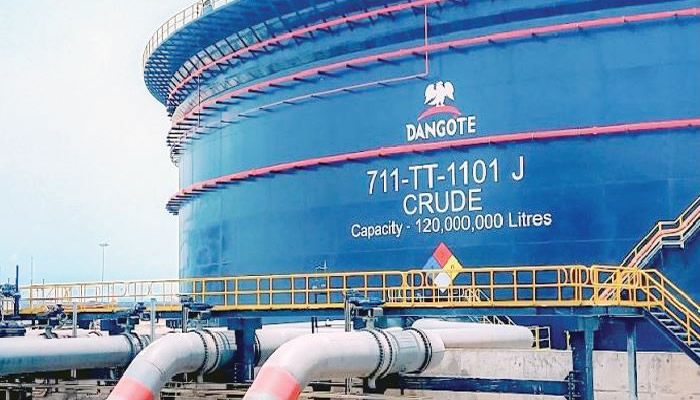
Nigeria’s downstream petroleum market has entered another period of price volatility following the decision by Dangote Petroleum Refinery to discontinue naira-denominated sales of refined petroleum products in favour of US dollar pricing. The policy shift has triggered an immediate increase in depot prices, with petrol rising by as much as ₦113 per litre, signalling the refinery’s growing exposure to foreign exchange risks and tightening crude supply conditions.
The refinery attributed the decision to persistent challenges in sourcing sufficient domestic crude under the Federal Government’s naira-for-crude programme. While the initiative was designed to allow local refiners purchase crude oil in naira, Dangote says allocations have remained inadequate, forcing it to source a significant portion of its feedstock on the international market where transactions are denominated in US dollars. The refinery noted that continuing to buy crude in dollars while selling refined products in naira had become commercially unsustainable.
The transition to dollar pricing has had an immediate impact across Nigeria’s fuel distribution network. Depot operators adjusted their prices upward, with marketers expected to transfer much of the increased cost to retail consumers. Analysts warn that the development could reverse recent gains in fuel price stability and intensify inflationary pressures, particularly given petrol’s importance to transportation, logistics, manufacturing and electricity generation through private generators.
READ ALSO: US-Iran Escalation Renews Energy Security Concerns as Strait of Hormuz Tensions Return
Beyond higher pump prices, the decision carries broader implications for Nigeria’s foreign exchange market. Petroleum marketers will now require greater access to US dollars to procure products from the refinery, increasing demand for foreign exchange and potentially exerting additional pressure on the naira. This could create a feedback loop where currency depreciation further raises domestic fuel prices, increasing the cost of doing business across multiple sectors of the economy.
The development also raises questions about the future of Nigeria’s domestic crude supply framework. Despite the country’s status as Africa’s largest crude oil producer, local refiners continue to face supply constraints that compel them to compete with international buyers for crude cargoes.
While the refinery has significantly reduced Nigeria’s dependence on imported petroleum products, its pricing model remains closely tied to international crude markets, foreign exchange availability, and feedstock security. These structural factors suggest that domestic fuel prices will continue to reflect global market dynamics, even with increased local refining capacity.