









Dangote, Ethiopia, Djibouti Partner on $660m Petroleum Pipeline Project
- September 25, 2026

The Dangote Group has partnered with Ethiopia and Djibouti to develop a $660 million refined petroleum products pipeline linking the two East African countries.
The project, known as the Damarjog-Dewele Oil Terminal and Pipeline Project, was announced at a groundbreaking ceremony in Djibouti on Thursday.
The development will comprise a 120-kilometre multiproduct pipeline connecting marine and coastal storage facilities at Damarjog in Djibouti with inland storage and distribution facilities at Dewele in Ethiopia.
The project is being developed through a partnership between the Dangote Group and Ethiopian Investment Holdings, with the infrastructure expected to strengthen the movement and distribution of refined petroleum products along the Ethiopia-Djibouti corridor.
According to project details, storage facilities at the two ends of the pipeline will have a combined capacity of approximately 1.175 million cubic metres. About 375,000 cubic metres of storage will be provided at Damarjog, while Dewele will have about 800,000 cubic metres. The pipeline is expected to become operational within 18 months.
Dangote: Project to strengthen energy security
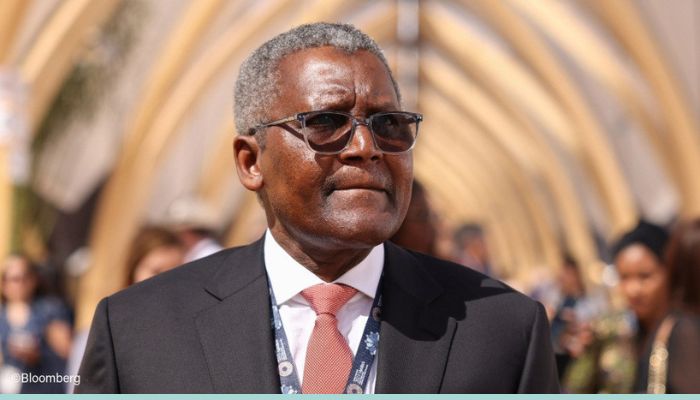
Speaking at the ceremony, Aliko Dangote, president and chief executive officer of the Dangote Group, said the project was designed to improve energy security and supply-chain efficiency in the region.
Dangote said the infrastructure would help reduce logistics constraints affecting Ethiopia while increasing economic activity in Djibouti through higher port activity, revenues and employment.
He described the Djibouti corridor as a strategic route for Ethiopia’s imports and exports, including petroleum products.
The project is expected to reduce Ethiopia’s reliance on the long-distance transportation of petroleum products by road, helping to address logistics delays and supply-chain vulnerabilities.
Ethiopian Prime Minister Abiy Ahmed said the pipeline would provide a more dependable and cost-effective system for transporting refined petroleum products into Ethiopia.
He said improved access to petroleum products would support sectors including aviation, transportation, agriculture, manufacturing and construction, while strengthening Ethiopia’s industrialisation drive.
Djibouti eyes energy and logistics hub status
Djibouti President Ismaïl Omar Guelleh described the project as part of the country’s ambition to become a leading logistics, industrial and energy hub in Africa.
He said the investment would increase trade volumes, expand port operations, attract additional investments and create direct and indirect employment opportunities.
The project will connect Djibouti’s maritime infrastructure with Ethiopia’s large inland market, further strengthening the economic corridor between the two countries.
Ethiopian authorities have also highlighted the potential reduction in fuel transit times. The Ethiopian Broadcasting Corporation reported that the pipeline could reduce the journey for fuel transported into Ethiopia from about five days by road to approximately 24 hours.
Expanding Dangote’s African energy footprint
The pipeline project represents another expansion of Dangote’s investments beyond Nigeria’s energy market.
The group is already involved in projects in Ethiopia, including a fertiliser pipeline and power plant, while its broader energy ambitions are extending into East Africa.
The development also comes as Dangote expands its position in the African petroleum market following the commissioning and ramp-up of its large-scale refinery in Nigeria.
For Ethiopia, the pipeline provides infrastructure for moving refined products more efficiently from Djibouti’s port facilities into the country’s interior. For Djibouti, it offers an opportunity to deepen its role as a regional logistics and energy gateway.
The project therefore positions the Ethiopia-Djibouti corridor as an increasingly important component of East Africa’s petroleum supply infrastructure, while giving Dangote a growing role in the development of cross-border energy infrastructure on the continent.