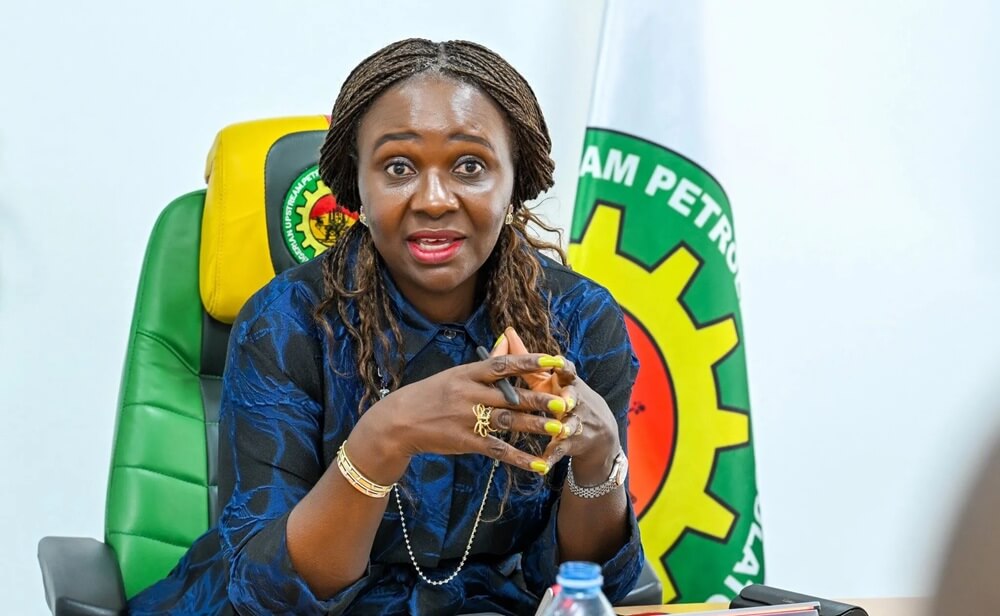
A Nigerian court has sentenced former Minister of Power Saleh Mamman to 75 years in prison over a multi-billion-naira fraud case tied to two of the country’s most significant hydropower developments, including the long-delayed 3,050MW Mambilla hydroelectric project.
Justice James Omotosho of the Federal High Court in Abuja convicted Mamman on all 12 counts brought by the Economic and Financial Crimes Commission (EFCC), which accused the former minister of laundering and diverting N33.8 billion ($21 million) in public funds earmarked for the Mambilla and Zungeru hydropower projects.
The court ordered the sentences to run consecutively, while also directing Interpol and Nigerian security agencies to arrest Mamman, who was absent during sentencing proceedings. Justice Omotosho ruled that the former minister’s absence was a deliberate attempt to obstruct justice.
The case places renewed scrutiny on the Mambilla Hydroelectric Power Station, a flagship energy project intended to become Nigeria’s largest power generation facility. Planned for Taraba State with an installed capacity of 3,050MW, the project has been under development in various forms since 1972 but has repeatedly stalled due to legal disputes, financing complications and governance concerns.
Estimated to cost around $5.8 billion, the Mambilla project is viewed as critical to Nigeria’s efforts to expand electricity supply and reduce dependence on gas-fired generation. However, decades of delays have prevented the project from contributing to the national grid, despite repeated government assurances that construction would move forward.
The court also ordered Mamman to refund outstanding funds linked to the alleged diversion of N22 billion associated with both the Mambilla and Zungeru projects.
Nigeria commissioned the 700MW Zungeru Hydroelectric Project in Niger State in 2023, making it the country’s second-largest hydropower facility after Kainji. Located on the Kaduna River, the plant was designed to provide roughly 10% of Nigeria’s electricity demand and improve grid stability through renewable generation capacity.
The EFCC first arraigned Mamman in July 2024 on charges bordering on conspiracy and money laundering. Earlier this month, the court had already found him guilty in absentia and issued a warrant for his arrest before delivering the final sentencing on Wednesday.