




Can Africa Turn Potential into Capital as Global Clean Energy Investment Hits $2.2 Trillion?
- June 3, 2026
The International Energy Agency‘s (IEA) projection that global clean energy investment will reach a record $2.2 trillion in 2026 marks another milestone in the world’s energy transition. The figure is nearly double the amount expected to flow into fossil fuels, indicating a profound shift in how governments, investors and corporations are allocating capital across the global energy sector.
Yet behind the headline lies a question of growing importance for Africa on whether the continent will benefit from this unprecedented surge in investment or it will remain on the margins of the global clean energy boom.
According to the IEA, global energy investment is expected to reach approximately $3.4 trillion in 2026, with clean energy technologies, including renewable power, electricity grids, battery storage, nuclear energy, electrification and energy efficiency accounting for about $2.2 trillion. Investment in fossil fuels, by comparison, is projected at roughly $1.2 trillion.
The trend reflects growing concerns about energy security, declining renewable technology costs and increasing commitments by governments to decarbonize their economies. Solar power, battery storage and electricity infrastructure continue to attract the largest share of new investment, particularly in China, Europe and North America.
For developed economies, the transition is increasingly being driven by economics as much as climate policy. Renewable technologies are becoming cheaper, while countries seek to reduce dependence on imported fossil fuels and strengthen domestic energy security.
Africa’s persistent investment deficit
While global clean energy investment is accelerating, Africa continues to receive only a fraction of global energy capital. The IEA estimates that Africa accounts for about 20 percent of the world’s population but attracts less than 3 percent of global energy investment. In some assessments, the continent receives less than 2 percent of global clean energy spending despite possessing some of the world’s most abundant renewable energy resources.
This disparity shows one of the central contradictions of the global energy transition. Africa contributes the least to global greenhouse gas emissions but remains among the regions most vulnerable to climate change and energy poverty.
More than 600 million Africans still lack access to electricity, while over one billion people lack access to clean cooking solutions. At the same time, the continent possesses approximately 60 percent of the world’s best solar resources, alongside substantial wind, hydro and geothermal potential.
The challenge, therefore, is not a lack of opportunity but a shortage of investment. According to the IEA, financing costs for renewable energy projects in Africa can be two to three times higher than those in advanced economies. Investors frequently cite currency volatility, policy uncertainty, weak utility finances, debt distress and limited project preparation capacity as key risks.
As a result, many otherwise viable projects struggle to reach financial close. The situation is further complicated by declining development finance flows. Public and development finance institution support for African energy projects has fallen significantly over the past decade, creating additional pressure on governments already facing fiscal constraints.
Without mechanisms to de-risk investments and reduce borrowing costs, Africa risks being bypassed as global investors concentrate capital in markets perceived as safer and more predictable.
Signs of progress
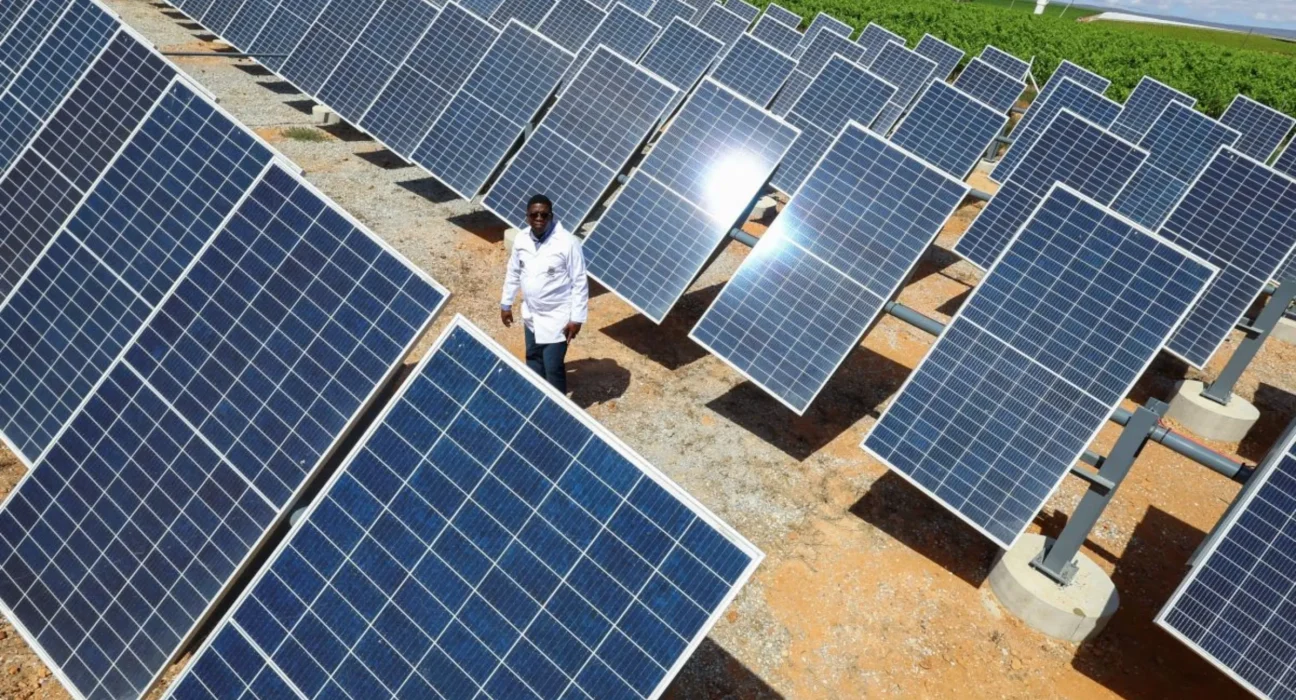
The IEA notes that private-sector investment in clean energy across Africa has increased substantially in recent years. Investment in low-emission power projects has grown rapidly, driven largely by solar energy, whose costs have fallen dramatically. Solar photovoltaic technology is now among the cheapest sources of electricity in many African markets.
Countries such as Morocco, Egypt, South Africa, Kenya and Namibia have increasingly attracted renewable energy investments through policy reforms, competitive procurement frameworks and public-private partnerships.
In several African markets, utility-scale solar projects, battery storage systems and mini-grid solutions are demonstrating that clean energy investments can generate attractive returns when supported by stable regulatory environments.
In Africa, the primary challenge remains expanding energy access while simultaneously pursuing decarbonisation. This means that investment decisions cannot be evaluated solely through the lens of emissions reductions. They must also address industrialisation, economic development, job creation and universal energy access.
The IEA estimates that Africa would need annual energy investment to more than double by 2030, reaching nearly $240 billion per year, with roughly three-quarters directed toward clean energy technologies.
Achieving that target will require significantly greater mobilisation of both domestic and international capital.
Can Africa capture a larger share?
The record $2.2 trillion global clean energy investment projection demonstrates that capital for the energy transition exists. Success will likely depend on several factors: strengthening regulatory frameworks, improving power sector governance, expanding regional electricity markets, reducing investment risks and leveraging blended finance instruments that combine public and private capital.
As the global energy transition gathers pace, Africa faces a defining moment. The continent possesses the renewable resources, the growing energy demand and the demographic potential to become a major player in the clean energy economy.
However, unless investment flows increase significantly, Africa risks remaining an observer rather than a beneficiary of one of the largest economic transformations of the 21st century.
The global clean energy revolution is accelerating. Whether Africa secures its share of the opportunity may ultimately determine not only the continent’s energy future but also the success of the global transition itself. EFA.